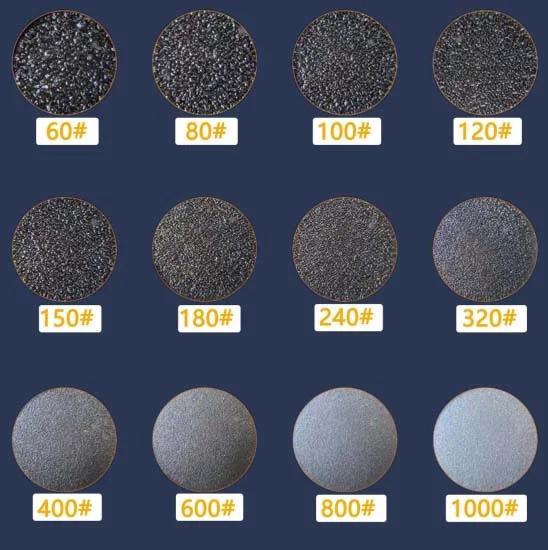
Hello every friends.Today i will introduction:How to select the grit in different situations to enhance grinding efficiency and save usage costs
Choosing the right fiber disc grit is critical — it directly affects cutting speed, surface finish, cost, and customer satisfaction. Most buyers choose wrong here, so if you understand this well, it’s a strong selling advantage.
What does “grit” mean?
Grit = the size of abrasive particles on the disc.
• Lower number (24, 36) → larger grains → more aggressive
• Higher number (80, 120) → smaller grains → smoother finish
Quick Grit Selection Guide
1. Heavy material removal (Grinding / Weld removal)
• Grit: 24 / 36
• Use for:
• Weld seam removal
• Edge grinding
• Heavy rust removal
Fastest cutting, rough finish
2. General purpose grinding
• Grit: 40 / 60
• Use for:
• Surface leveling
• Light weld blending
• Preparation before coating
Best balance between speed and finish (most commonly used)
3. Surface preparation / light finishing
• Grit: 80
• Use for:
• Paint removal
• Surface cleaning
• Pre-polishing
Smoother surface, less aggressive
4. Fine finishing
• Grit: 100 / 120+
• Use for:
• Final finishing
• Stainless steel surface work
• Decorative applications
Very smooth, low removal rate
Simple Rule (Easy to Remember)
Rough work → low grit (24–36)
General work → medium grit (40–60)
Finishing → high grit (80–120)
Material-Based Recommendation
Carbon Steel
• 24–36 → weld removal
• 40–60 → general grinding
Stainless Steel
• 40–60 → grinding
• 80–120 → finishing
Prefer ceramic or zirconia to reduce heat
Aluminum / Soft Metal
• 40–80
Use anti-loading discs (important)and avoid overly coarse grit (use 40# – 80#) to prevent grit embedment; finish with fine/very fine grit.
Efficiency vs Cost Insight
This is where many buyers make mistakes:
• Using too fine grit for heavy work → very slow, high labor cost
• Using too coarse grit for finishing → rework needed
The cheapest disc is not the lowest price — it’s the one that finishes the job fastest with least steps.
Common Mistakes to Avoid
❌ One grit for all jobs
❌ Choosing based only on price
❌ Ignoring material type
❌ Skipping grit sequence
At the end of the article, I have summarized a table based on different abrasive materials and grit sizes for your reference.
| Material | Recommended Grit | Abrasive Type | Notes |
|---|
| Carbon Steel | 24–60 | Zirconia / Ceramic | Most common application |
| Stainless Steel | 40–120 | Ceramic | Low heat, avoid discoloration |
| Aluminum | 60–80 | Aluminum Oxide | Use anti-loading coating |
| Cast Iron | 24–40 | Ceramic | High pressure grinding |
| Non-ferrous metals | 60–100 | Aluminum Oxide | Prevent clogging |